Italy is a land where history and architecture intertwine to create some of the world’s most awe-inspiring structures. Among them, the Pantheon in Rome stands out as a true masterpiece of ancient engineering, timeless beauty, and cultural significance.
A Temple of All Gods
The word Pantheon comes from the Greek pan (all) and theos (god), meaning “temple of all gods.” Originally built around 27 BCE by Marcus Agrippa and later rebuilt by Emperor Hadrian around 118–125 CE after it was damaged by fire, the Pantheon is one of the best-preserved monuments of Ancient Rome.
Architectural Marvel
What makes the Pantheon truly extraordinary is its dome—a perfect hemisphere with a diameter of 43.3 meters (142 feet), which was the largest in the world for over 1,300 years and remains the largest unreinforced concrete dome to this day.
At the center of the dome is the oculus, a circular opening 8.2 meters wide that lets natural light (and sometimes rain) enter the building. This feature not only illuminates the interior but also symbolizes the connection between the heavens and earth.
From Pagan Temple to Christian Church
In 609 CE, the Pantheon was consecrated as a Christian church, dedicated to St. Mary and the Martyrs, which helped preserve it through centuries of political and religious change. Today, it’s not only a place of worship but also a resting place for Italian kings and the famous artist Raphael.
Why It Still Matters Today
The Pantheon is more than just a historic site—it’s a symbol of Roman ingenuity, a bridge between classical antiquity and modern architecture. Architects throughout history, from the Renaissance to the present day, have studied its proportions, symmetry, and beauty for inspiration.
Did You Know?
The Pantheon’s massive columns were imported from Egypt.
The building is so well-designed that rainwater drains through tiny holes in the floor.
Michelangelo called the Pantheon the work of angels, not of men.
Visit and Experience
Whether you’re in Italy as a tourist or a language student, a visit to the Pantheon is a must. It’s a chance to step into a building that has stood for nearly 2,000 years, and still welcomes people every day—just as it did in ancient times.
Interested in learning more about Italy’s rich culture and language? Explore our courses and join a community passionate about Italian life, history, and beauty.
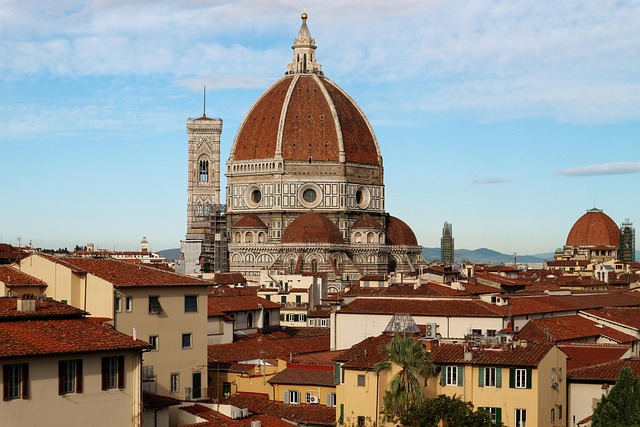
Il Duomo della Cattedrale di Firenze (1420-36), è stato realizzato dal grande Filippo Brunelleschi (1377-1446). La più grande volta del mondo, maestosamente domina la città di Firenze. L’arte geniale del Brunelleschi consiste nell’aver applicato il principio geometrico della prospettiva agli edifici. La struttura nella sua apparenza esteriore rivela armonia di forme, chiarezza spaziale, e raffinatezza dei particolari decorativi.
The Duomo of Florence Cathedral (1420-36), was built by the great Filippo Brunelleschi (1377-1446). The largest vault in the world, it majestically dominates the city of Florence. Brunelleschi’s genius art consists in having applied the geometric principle of perspective to buildings. The structure in its outward appearance reveals harmony of form, spatial clarity, and refinement of decorative details.
El Duomo de la Catedral de Florencia (1420-36), fue construido por el gran Filippo Brunelleschi (1377-1446). Es la cúpula más grande del mundo y domina majestuosamente la ciudad de Florencia. El ingenioso arte de Brunelleschi reside en su aplicación del principio geométrico de la perspectiva a los edificios. La estructura en su aspecto exterior revela armonía de formas, claridad espacial y el refinamiento de los detalles decorativos.
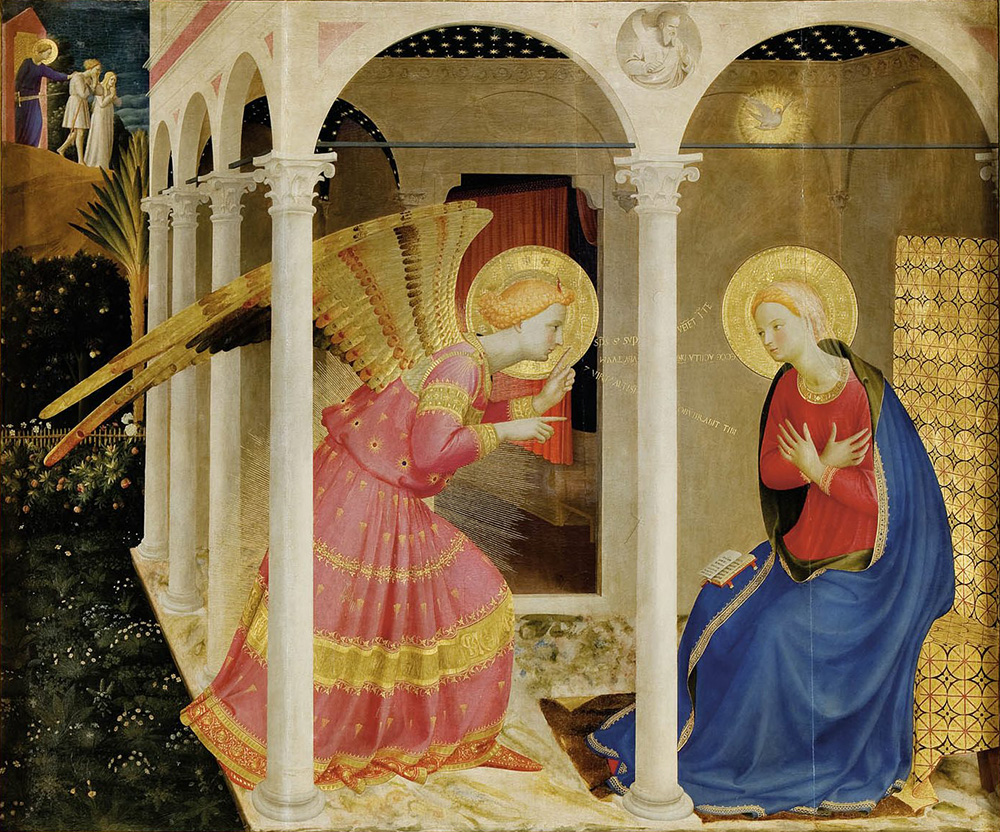
The Annunciation (1432-1434), is an extraordinary work of art composed by Fra Angelico (1400 ca. -1455), one of the most distinguished Italian painters of the 15th century. The scene, religious in nature, depicts the Archangel Gabriel’s announcement that Mary would conceive the son of God. Fra Angelico’s perfect and meticulous style shows us that every form is clear and realistic. The strong light used in the painting eliminates the shadows. Every color of the composition is bright and shimmering.
La Anunciación (1432-1434), es una extraordinaria obra de arte compuesta por Fra’ Angelico (1400 ca. -1455), uno de los pintores italianos más destacados del siglo XV. La escena, de carácter religioso, representa el anuncio del arcángel Gabriel de que María concebirá el hijo de Dios. El estilo perfecto y meticuloso de Fra’ Angelico nos muestra que cada forma es clara y realista. La fuerte luz utilizada en el panel elimina las sombras. Todos los colores de la composición son brillantes y resplandecientes.
L’Annunciazione (1432-1434) è una straordinaria opera d’arte composta da Fra’ Angelico (1400 ca.-1455), uno dei più illustri pittori italiani del XV secolo. La scena, di carattere religioso, raffigura l’annuncio dell’Arcangelo Gabriele che Maria concepirà il figlio di Dio. Lo stile perfetto e meticoloso di Fra’ Angelico ci mostra che ogni forma è chiara e realistica. La forte luce utilizzata elimina le ombre. Ogni colore della composizione risulta luminoso e scintillante.
*Para saber más, inscríbete en los cursos de Lengua y Arte con María. *To learn more, enroll in Language and Art courses with Maria.
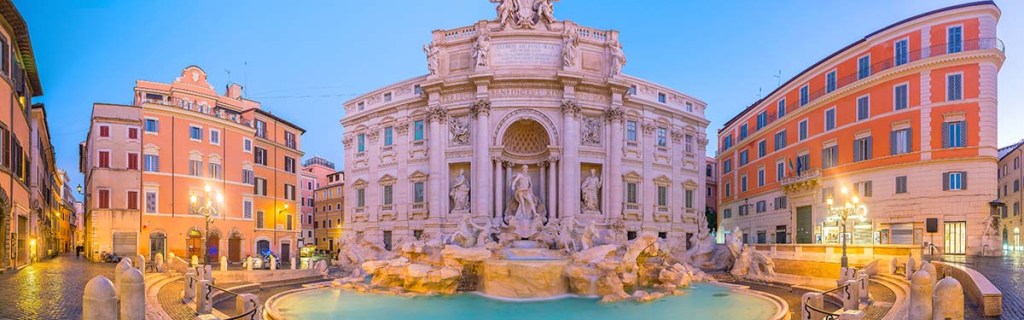
La Fontana de Trevi está ubicada en el distrito del Quirinal en Roma y es conocida como una de las fontanas más espectaculares del mundo del periodo barroco. Inicialmente La Fontana de Trevi fue diseñada por Gian Lorenzo Bernini para el Papa Clemente XII. Sin embargo, se construyó años después (1732 a 1762), gracias al arquitecto Nicola Salvi. La Fontana se encuentra en la confluencia de tres calles. Estas tres calles (tre vie) dan a la Fontana de Trevi su nombre, la Fontana de las Tres Calles. En el centro, bajo el arco, se alza la estatua del dios náutico Neptuno, arrastrado hacia el mar en su carro en forma de concha tirado por dos caballos alados y tritones (jóvenes dioses del mar). Uno de los caballos es tranquilo y obediente, el otro es bullicioso. Simbolizan las mareas cambiantes del mar.
La Fontana de Trevi utiliza mucha agua. Según la leyenda, una moneda depositada en el agua asegura el regreso a Roma. Si buscas el amor, puedes lanzar una segunda moneda. La Fontana de Trevi se puede visitar tanto de día como de noche, cuando resplandece con una hermosa iluminación. La fama de la fuente se debe en parte a las numerosas películas, entre ellas La Dolce Vita (1960) por Federico Fellini.


 Maria Conte Programs