

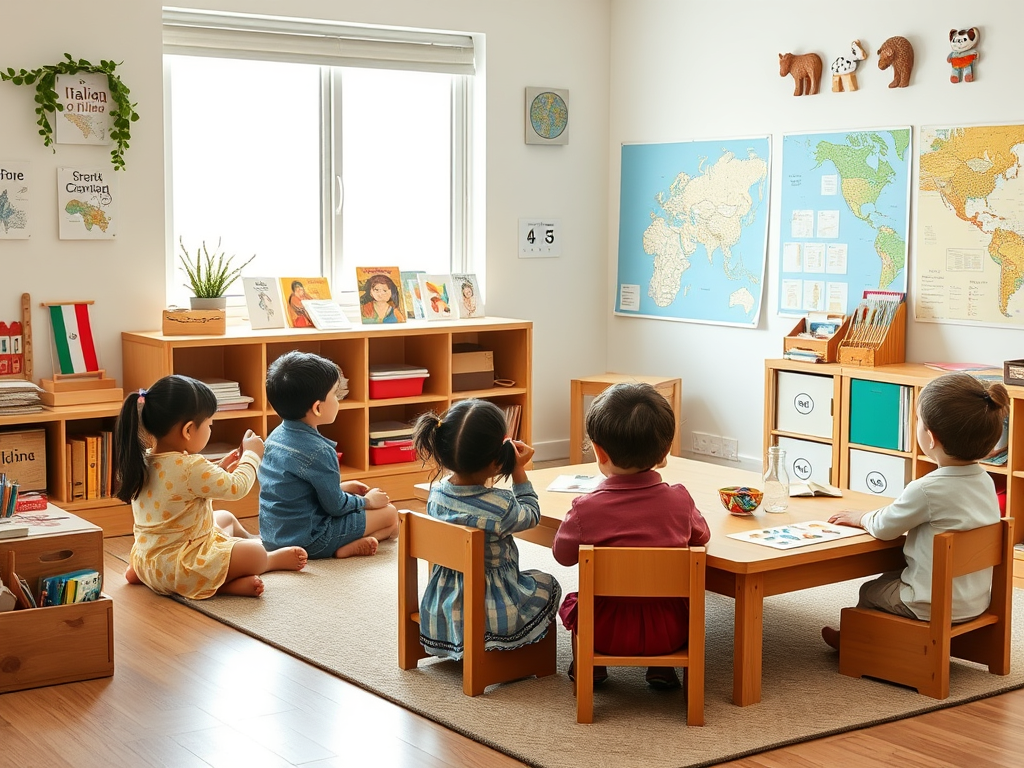
“The greatest sign of success for a teacher is to be able to say: ‘The children are working as if I did not exist.‘” – Maria Montessori
This timeless quote beautifully reflects the heart of the Montessori philosophy: true success in education comes when the teacher is no longer the center of attention, but rather the guide behind a child’s growing independence, focus, and love for learning.
In a Montessori environment, children are not passively receiving information — they are active explorers, making choices, following their curiosity, and engaging deeply with the materials and the world around them. The teacher prepares the space, provides structure, and then gently steps back.
💫 This is especially powerful in the context of foreign language learning.
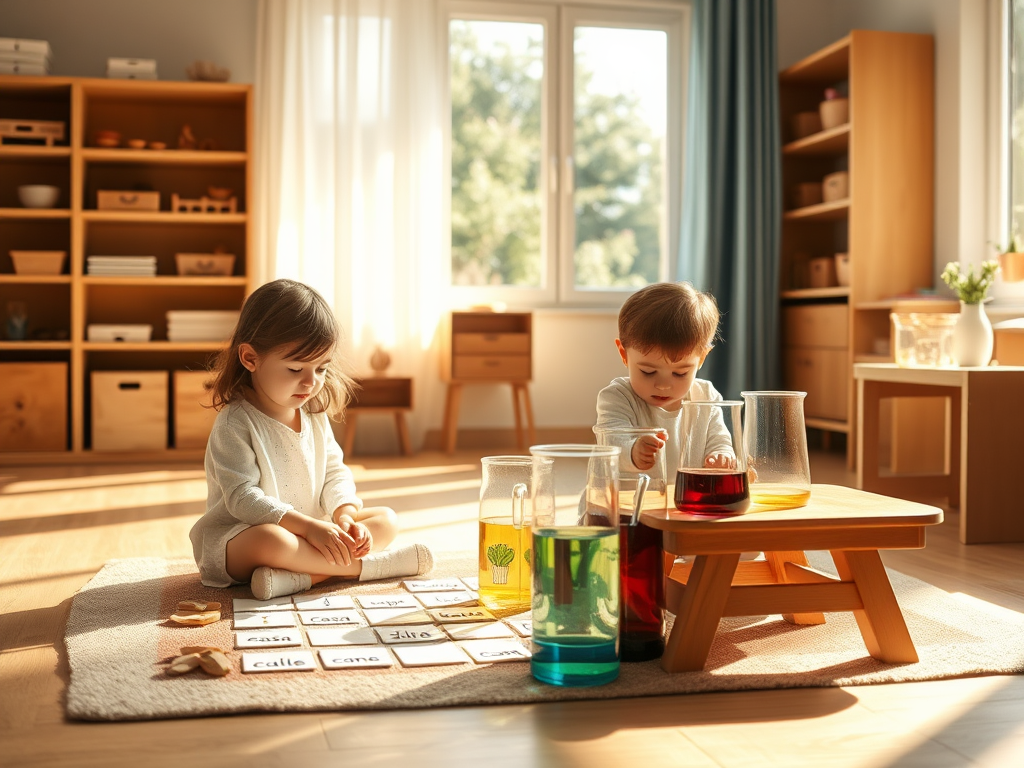
When children learn a second language through the Montessori approach, they’re not memorizing vocabulary for a test. They’re absorbing language naturally — through songs, movement, storytelling, hands-on materials, and meaningful conversation. They associate new words with real-life actions and objects, just as they did with their first language.
Language becomes a living experience, not an academic subject.
Montessori’s emphasis on repetition, freedom of choice, and a prepared environment supports deep internalization of a new language. The result? Children speak, sing, and think in the target language with joy — and often without realizing they’re “studying” at all.
That magical moment, when a child spontaneously uses a new word, sings a song with confidence, or understands instructions in a second language while fully engaged in their work — that’s the moment the teacher can smile and think:
“They’re working as if I didn’t exist.”
And that is success.
🇮🇹 Riflessione Montessori + Apprendimento delle Lingue
“Il più grande segno di successo per un insegnante è poter dire: ‘I bambini stanno lavorando come se io non esistessi’.” – Maria Montessori
Questa citazione senza tempo riflette perfettamente il cuore della filosofia Montessori: il vero successo nell’educazione arriva quando l’insegnante non è più il centro dell’attenzione, ma piuttosto la guida dietro la crescente indipendenza, concentrazione e amore per l’apprendimento del bambino.
In un ambiente Montessori, i bambini non ricevono passivamente informazioni — sono esploratori attivi, fanno scelte, seguono la loro curiosità e si immergono profondamente nei materiali e nel mondo che li circonda. L’insegnante prepara lo spazio, offre una struttura e poi si fa da parte con delicatezza.
💫 Questo è particolarmente potente nel contesto dell’apprendimento delle lingue straniere.
Quando i bambini imparano una seconda lingua con il metodo Montessori, non memorizzano semplicemente vocaboli per un test. Assorbono la lingua in modo naturale — attraverso canzoni, movimento, narrazione, materiali pratici e conversazioni significative. Associano le nuove parole ad azioni e oggetti reali, proprio come hanno fatto con la loro prima lingua.
La lingua diventa un’esperienza viva, non una materia accademica.
L’enfasi di Montessori sulla ripetizione, la libertà di scelta e un ambiente preparato favorisce una profonda interiorizzazione della nuova lingua. Il risultato? I bambini parlano, cantano e pensano nella lingua target con gioia — spesso senza rendersi conto di stare “studiando” affatto.
Quel momento magico, quando un bambino usa spontaneamente una nuova parola, canta una canzone con sicurezza o capisce le istruzioni in una seconda lingua mentre è completamente immerso nel suo lavoro — è il momento in cui l’insegnante può sorridere e pensare:
“Stanno lavorando come se io non esistessi.”
E quello è il vero successo.
🇪🇸 Reflexión Montessori + Aprendizaje de Idiomas
“La mayor señal de éxito para un maestro es poder decir: ‘Los niños están trabajando como si yo no existiera’.” – María Montessori
Esta cita atemporal refleja bellamente el corazón de la filosofía Montessori: el verdadero éxito en la educación llega cuando el maestro deja de ser el centro de atención y se convierte en la guía detrás de la creciente independencia, concentración y amor por el aprendizaje del niño.
En un ambiente Montessori, los niños no reciben información de manera pasiva — son exploradores activos, toman decisiones, siguen su curiosidad y se involucran profundamente con los materiales y el mundo que los rodea. El maestro prepara el espacio, ofrece estructura y luego se retira con delicadeza.
💫 Esto es especialmente poderoso en el contexto del aprendizaje de un idioma extranjero.
Cuando los niños aprenden un segundo idioma a través del método Montessori, no memorizan vocabulario para un examen. Absorben el idioma de forma natural — mediante canciones, movimiento, narración de cuentos, materiales prácticos y conversaciones significativas. Asocian las nuevas palabras con acciones y objetos reales, tal como hicieron con su primera lengua.
El idioma se convierte en una experiencia viva, no en una materia académica.
El énfasis de Montessori en la repetición, la libertad de elección y un ambiente preparado apoya una profunda internalización del nuevo idioma. ¿El resultado? Los niños hablan, cantan y piensan en el idioma objetivo con alegría — y a menudo sin darse cuenta de que están “estudiando” en absoluto.
Ese momento mágico, cuando un niño usa espontáneamente una palabra nueva, canta una canción con confianza o entiende instrucciones en un segundo idioma mientras está totalmente concentrado en su trabajo — es el momento en que el maestro puede sonreír y pensar:
“Están trabajando como si yo no existiera.”
Y ese es el éxito.
 Maria Conte Programs